
Books: Faith in a Changing Climate and Net Zero Redux
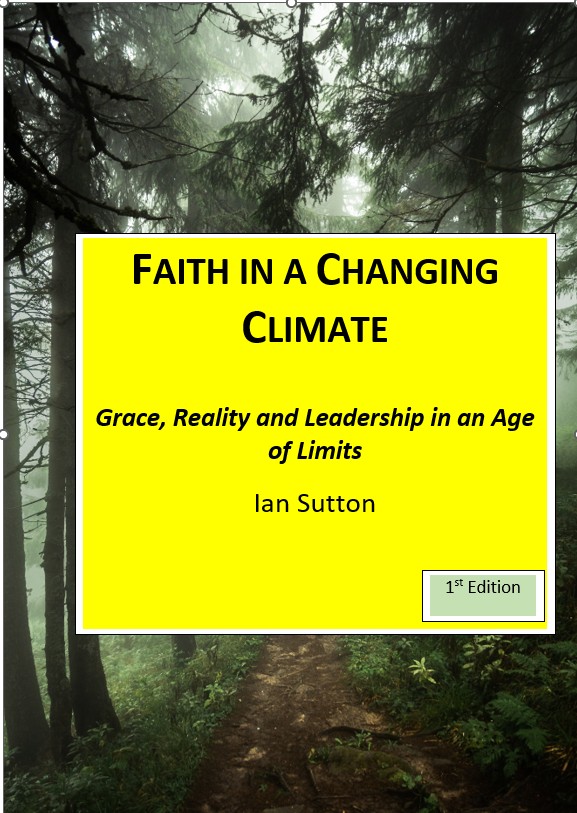
This post provides background to the decision to revive the books Faith in a Changing Climate and Net Zero.
The following is from the post.
At the time of COP21, I began writing two books: Net Zero by 2050 and Faith in a Changing Climate. The goal of the first book was to show how ‘green’ technologies might realistically help industry transition toward a new, greener type of economy. The goal of the second book was to explore how faith communities might provide realistic leadership in a new and rather scary world. (The word ‘realistic’ appeared frequently in both books.)
As it became apparent that the green movement was losing momentum, and that its promises were increasingly detached from physical and economic realities, I decided to put both projects on hold.
However, now that physical constraints are becoming ever more real, particularly with regard to the climate, I have decided to revive both manuscripts, with the intention of publishing them in 2026.
The original title of the first book, Net Zero by 2050, reflected the idea that rapid deployment of new technologies might allow voluntary achievement of net-zero greenhouse gas emissions by mid-century. This will not happen — at least, not voluntarily. Hence the new working title of the book is Net Zero Redux. (The word redux is used to describe an idea or concept that has been ‘brought back’.) This is not a revision that merely incorporates better data into the same framework. It is a rethinking of the framework itself. Net zero was never a destination; it was a story we told ourselves to avoid confronting limits.
Faith in a Changing Climate is written explicitly from the perspective of limits. It does not offer pathways to decarbonized abundance or promises of a new, green world of material abundance. Instead, it asks what leadership, responsibility, and faithfulness look like in a period of long-term decline. It argues that the central challenge we face is not technological but moral: how communities respond when growth can no longer be assumed, and when calls for sacrifice are no longer theoretical.